

Goldendoodle Grooming: Coat Checks and Manageable Haircuts
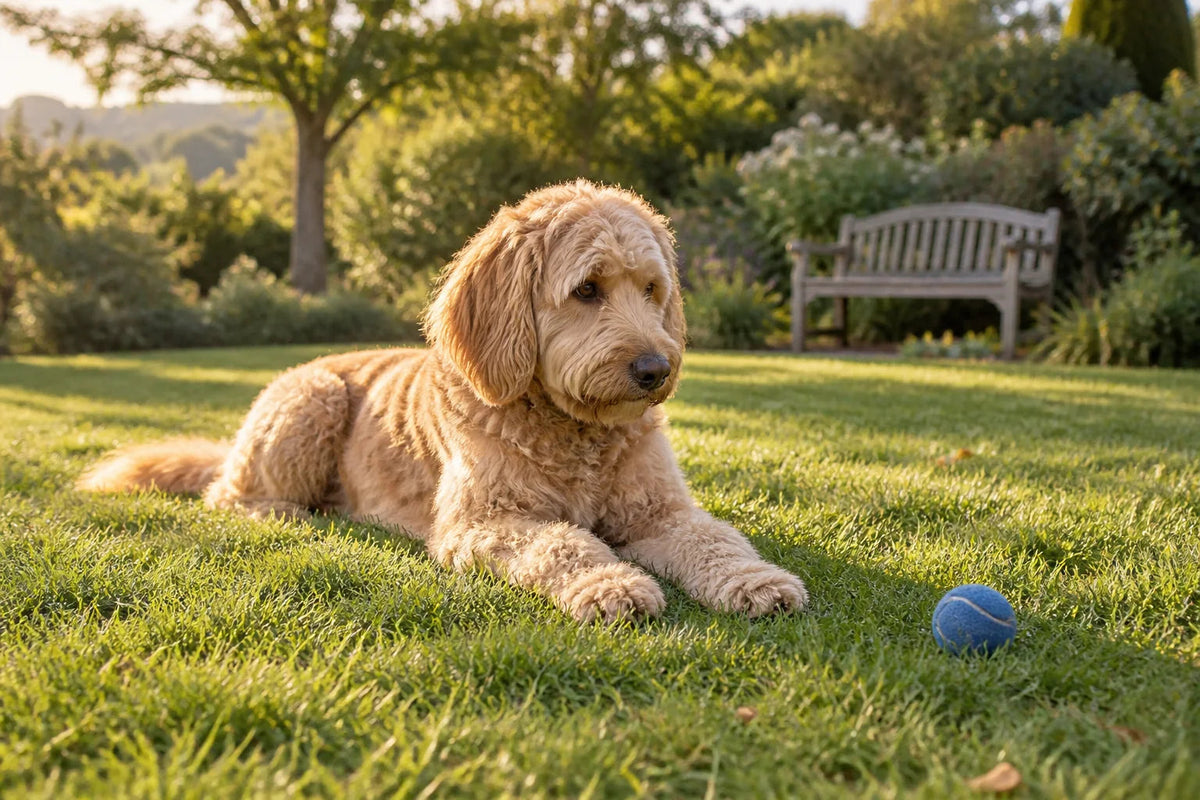
A Goldendoodle's fluffy outline is the result of both a haircut and the care between haircuts. The difficult part is often the hair you cannot see: soft layers beneath the harness, behind the ears and where the legs meet the body.
Goldendoodles are Golden Retriever–Poodle crosses, not a promise of one predictable coat. The useful starting point is your dog's current texture, density and tendency to tangle, rather than a photograph of another dog's teddy-bear trim.
The best length is one you can keep combable. A shorter, comfortable style with regular maintenance is a better outcome than a long coat that repeatedly needs painful detangling.
Curliness does not tell the whole story
The Goldendoodle association's coat guide explains that coats can be straight, wavy or curly and distinguishes coat traits from generation labels. An F1 or F1B label alone is not a complete grooming plan.
Look at the roots as well as the outline. Does the hair separate easily? Is there a dense layer beneath the loose waves? Does shed hair collect in the brush, in the coat or around the home? A groomer can help assess these features and recommend a routine for the actual dog.
Do not equate low shedding with little grooming, or assume any crossbreed is guaranteed to be allergy-free. This guide focuses on keeping the coat comfortable, not making allergy promises.
Replace surface brushing with a section check
The association's grooming guidance recommends regular brushing followed by a metal comb. The useful principle is verification: a comb can reveal snags that a quick pass over the outside did not resolve.
- Choose a calm time and a secure non-slip surface.
- Part a narrow layer of coat and brush it gently, working outwards through the hair without scraping the skin.
- Follow with a comb, using wider teeth first.
- Check the section from close to the skin through to the ends without forcing it.
- If it snags, identify whether there is a small loose tangle, debris or a tight mat before continuing.
The VUNRO combination comb can help with this final check. It should move through prepared hair without dragging the skin. Do not repeatedly scrape the same patch or turn a comb check into a battle.
Five areas that deserve their own check
- Behind the ears: lift the surrounding hair gently and inspect the roots.
- Harness lines: remove the harness and check the compressed hair beneath it.
- Armpits: work with the leg in a comfortable position, without pulling it outward.
- Inner thighs and underside: separate small sections rather than brushing the outside of the legs alone.
- Beard and feet: remove ordinary food residue and loose outdoor debris before they become embedded.
Use short, frequent checks to find problems early. A long or dense coat may need daily attention, while the time required will change with length and activity. If snags are accumulating despite your routine, the answer may be a different trim or technique rather than simply brushing harder.
Make a haircut request that a groomer can use
Instead of asking only for “fluffy”, talk through the body, legs, ears, face and tail separately. Explain how often you can realistically comb the coat and where it tangles first. Ask to see a length example and agree which areas should be easier to maintain.
A fuller head with practical body and leg lengths may suit one dog; another may be more comfortable with less hair around the beard and feet. No style should depend on prolonged uncomfortable dematting. Tight or felted hair needs professional assessment before deciding what can safely be retained.
Introduce puppies to gentle handling and a groomer's environment early, arranging visits according to the salon's requirements and your puppy's circumstances. You do not need to wait for a difficult, tangled coat before teaching that grooming can be calm.
Do the preparation before reaching for a clipper
For a routine bath, assess the coat first and have substantial matting dealt with professionally. Use dog shampoo as directed, rinse thoroughly and blot away water without rubbing the hair into knots. Use comfortable moving airflow if tolerated, checking the roots of dense areas as they dry.
A coat that feels dry on the surface may still be damp underneath. For clipping, it should be clean, fully dry and combable. Our coat preparation guide explains why this matters when a blade seems to catch or stop moving through the hair.
Owners maintaining an appropriate clipped trim can consider the VUNRO D-Series clipper, which takes D-Series blades. Learn safe handling and choose the finished length with guidance. A more powerful tool does not turn a mat into prepared coat.
Use accessories for their intended job
The VUNRO Universal Guard Comb Set fits compatible A5 and D-Series blade setups. Confirm the supporting blade and attachment before use. A guard comb sets length in tangle-free hair; it is not a detangling tool.
Include nails and dewclaws in regular checks. Long foot hair can disguise nail length, and exercise does not guarantee that every nail wears evenly. If you use a VUNRO nail grinder, introduce its sound gradually and use brief contact with breaks, keeping surrounding hair clear and stopping before the sensitive quick.
Judge the result between appointments
A useful haircut should remain manageable after the salon finish has settled. Notice how quickly the ears, armpits and beard need attention, then use that information at the next appointment. The goal is a comfortable dog and a repeatable routine, not maintaining maximum length at any cost.
Keep learning
More from the Blade Blog

Whippet Grooming: Gentle Coat Care and Comfortable Nails
Read the guide →
Chihuahua Grooming: Smooth Coats, Long Coats and Tiny Paws
Read the guide →


